Sep 2024 – Apr 2025
Natural Light Wake-Up System
A silent alarm clock. Two STM32 boards open a blind slowly at the set time, so natural light wakes you instead of a sound. Designed for people who find sudden alarms distressing.
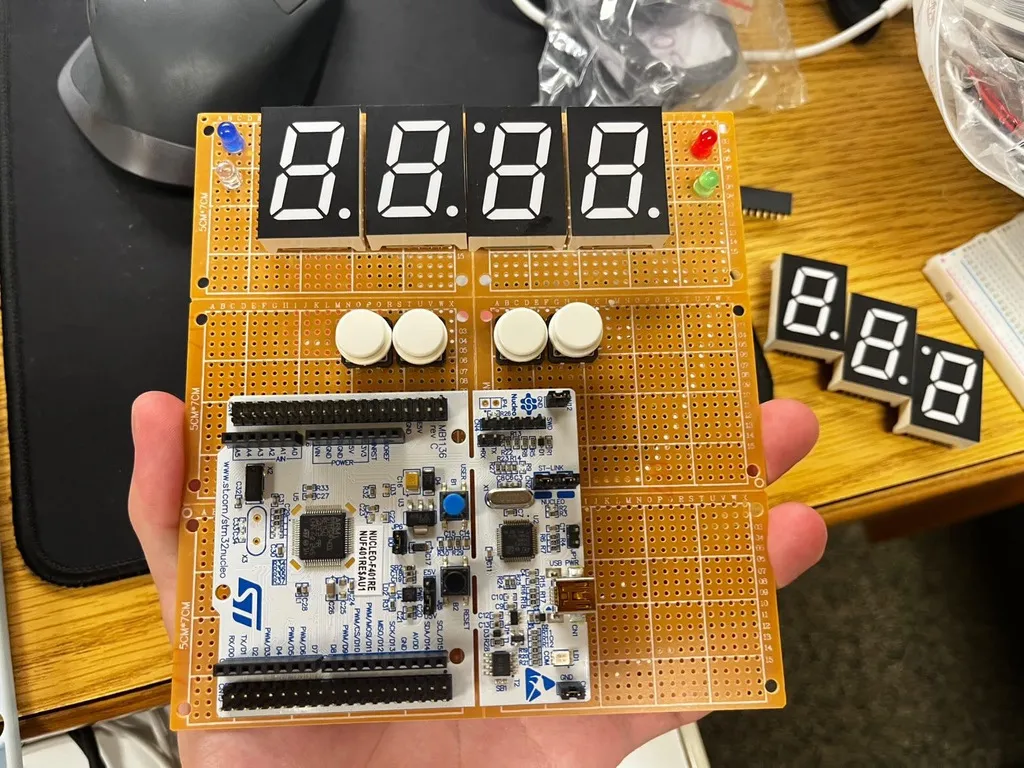
Problem
People with misophonia can react strongly to sudden sounds, and a loud alarm is a bad way to start the day. Sunrise lamps help, but they use artificial light, which does less for the body clock than natural light. Motorized blinds exist, but they are expensive and often limited to preset sizes.
Design
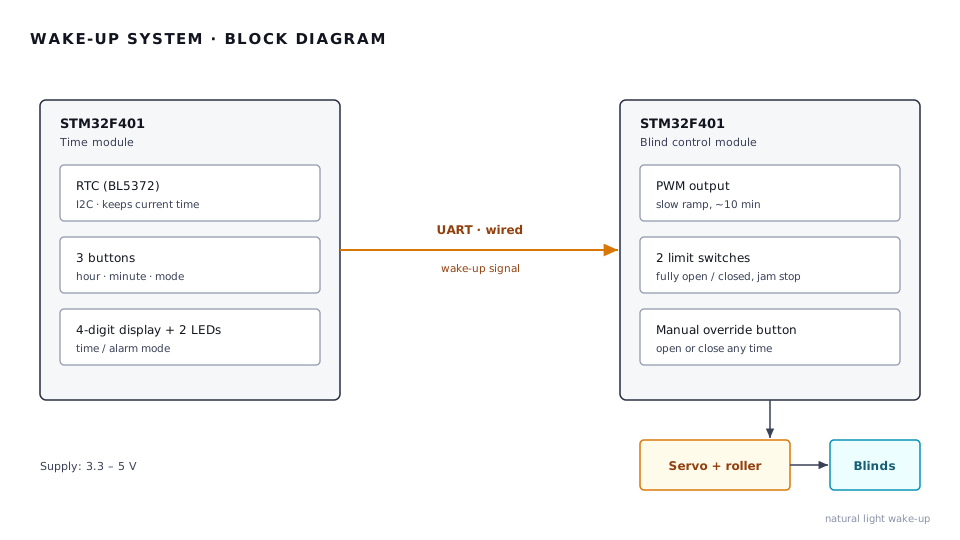
Two STM32F401 boards, each with one job.
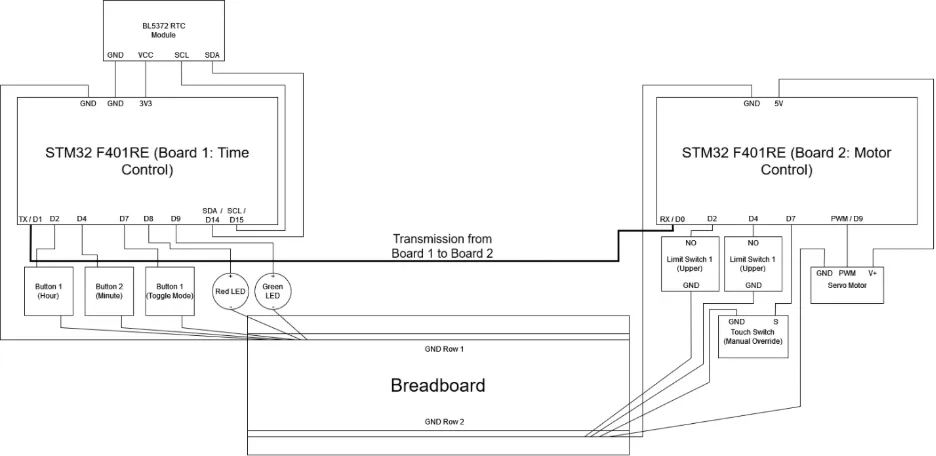
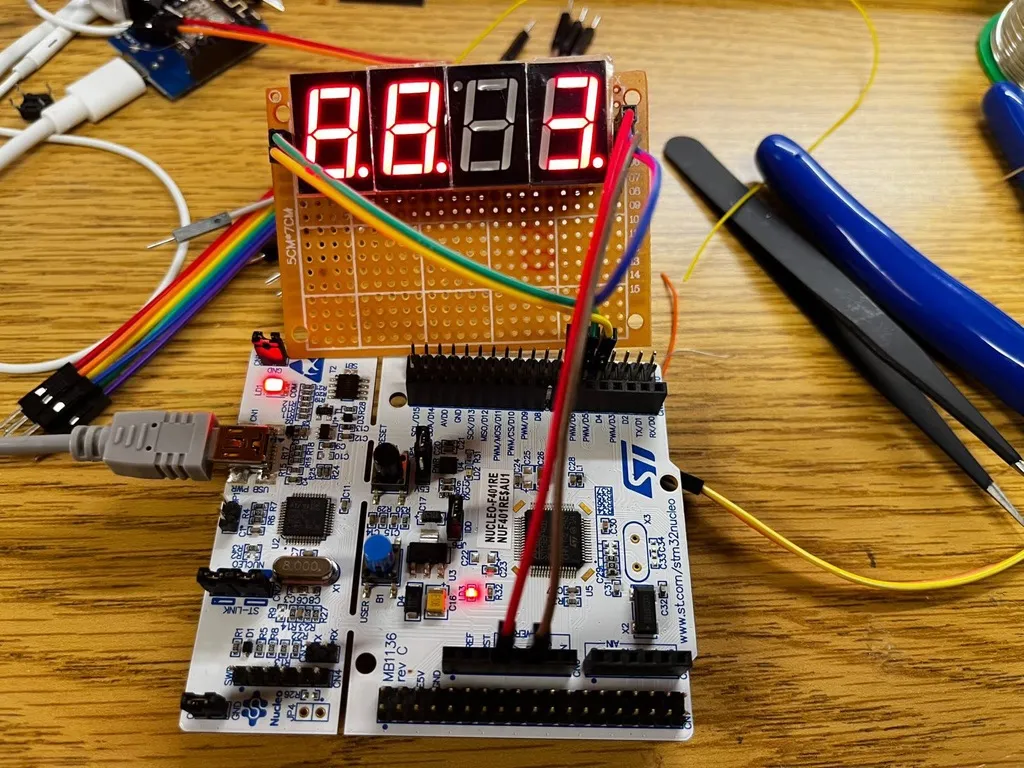
- Time module. A BL5372 real-time clock over I2C keeps the time. Three buttons set the hour, minute, and mode. A 4-digit display shows the time or the alarm, and two LEDs show which mode is active.
- Blind control module. On the wake-up signal, a PWM output drives a servo and roller that raise the blind over about 10 minutes, like a sunrise. Two limit switches stop the motor at fully open and fully closed, and protect against jams. A manual override button opens or closes the blind at any time.
The two boards talk over a wired UART link.
Display
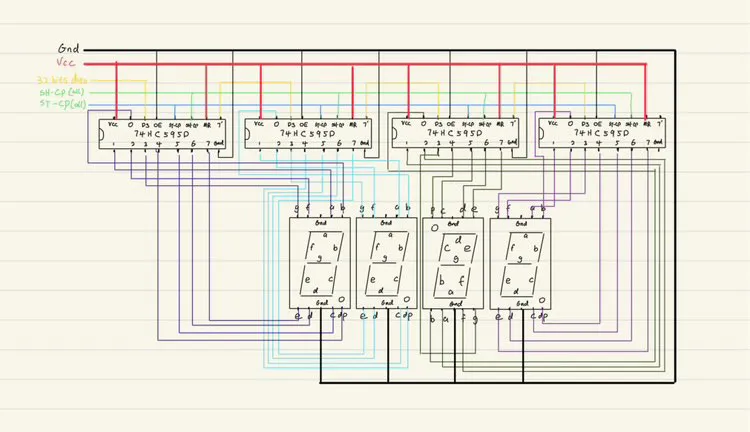
Four 74HC595 shift registers drive the four digits, so the time module needs only a data line and two clocks for all 32 segments.
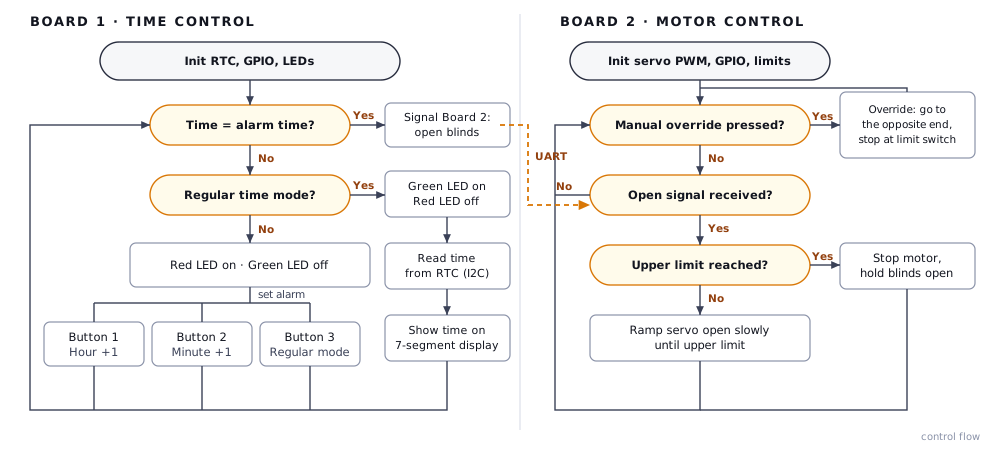
Control flow
The time module checks the clock against the alarm and signals the blind module. The blind module handles the override first, then the wake-up signal, and always stops at a limit switch.
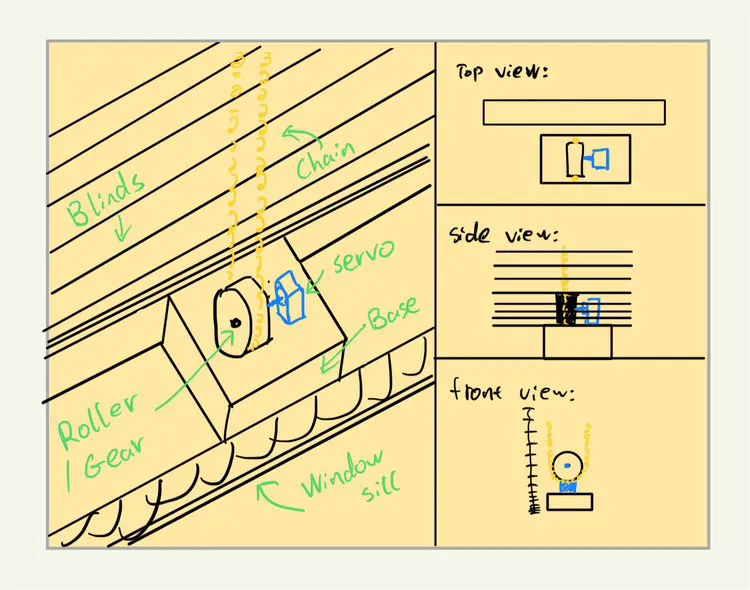
Mechanism
A servo turns a roller that pulls the chain of a standard blind. The assembly sits on a small base on the window sill, so it fits existing blinds without modifying them.
Key choices
- Natural light, not a lamp or vibration. Light is gentler than sound, and real daylight matches the body clock better than a lamp. A vibrating band would need to be worn in bed.
- Servo and roller. Low cost, and it adapts to many standard blinds.
- Wired link. Low latency, and nothing to pair or lose connection.
- Limit switches and manual override. The motor cannot over-drive the blind, and the user can always take control.